 Jenni Toriseva

Oura Ring 5 — Defining the smallest, most comfortable ring
Oura wanted to reach people who weren't buying smart rings. I led the project from research to concept — finding out who they were, what they needed, and what a ring made for them should look and feel like.
- Company
- Oura
- Product
- Oura Ring 5
- Role
- Hardware UX lead — led the project from research to concept
- Team
- Me, a CMF designer and an industrial design intern
- Timeline
- Discovery 2023–24, then prototyping through to launch
Context
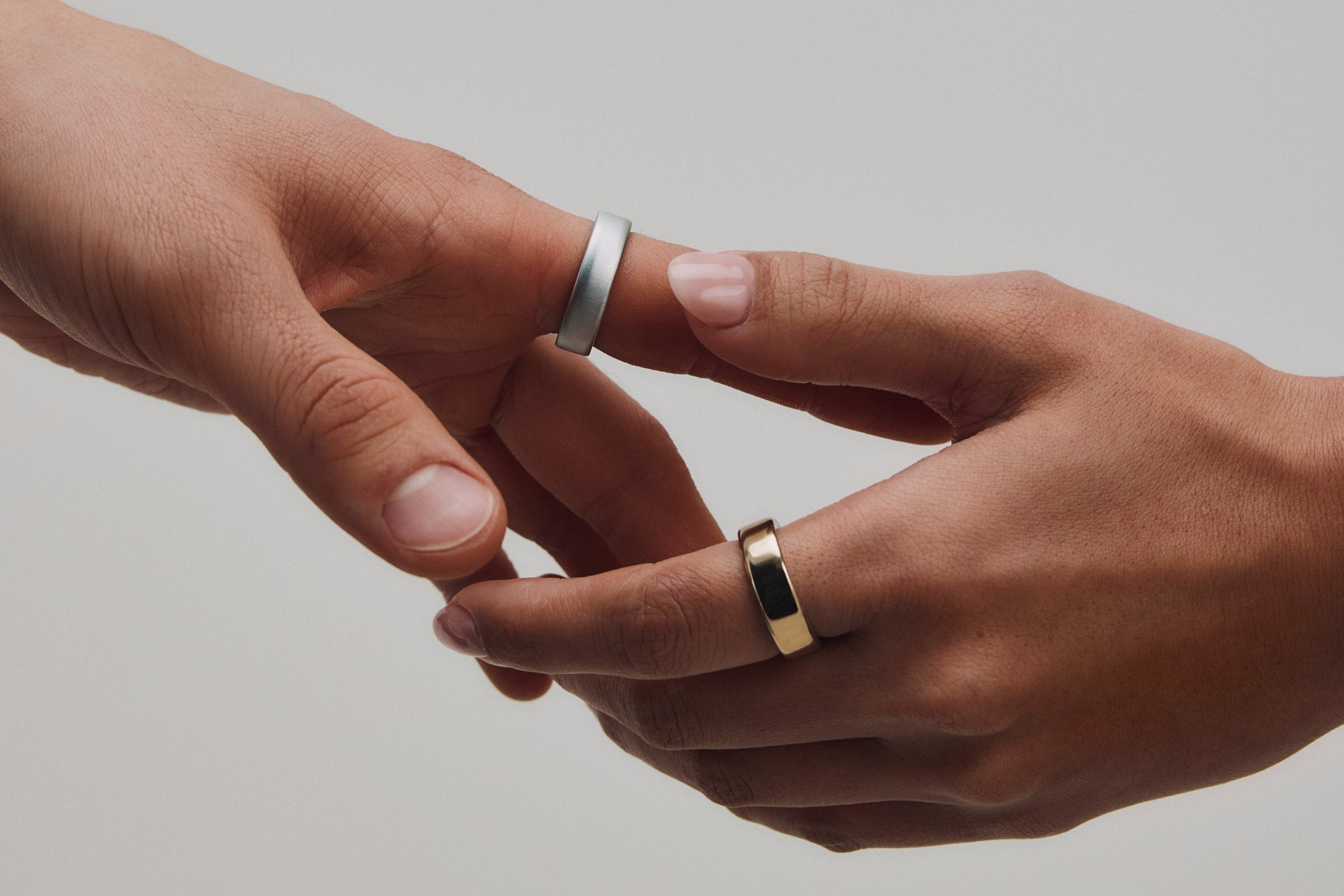
Size, comfort and price had long kept many people from buying a smart ring. Oura had a hunch: a smaller ring could open the category to a much wider audience.
My job was to test that hunch — and to find out who that ring should be for, what they need from it, and how it should be designed.
How I researched
I planned and ran the study end to end, following 24 people in the Helsinki region, aged 25 to 65, none of whom owned a smart ring. Some already used a health wearable, others were only curious, and they ranged from very structured to very relaxed about their wellbeing.
- A seven-day diary, where people documented their routines, strategies and barriers around health — and the technology they already used.
- Home interviews of an hour and a half, where people felt at ease and I could see the gap between what was said and what was lived.
- Design provocations I created: physical ring forms, material samples and feature ideas, broken into variables so people could react, compare and argue.
- A second round at the office with prototype rings to try on, refining width, thickness and profile.
A parallel quantitative study tested how the qualitative findings would scale to the US market.
The full project is password-protected
It covers confidential product work. Ask me for the password and I'll gladly share it.


