 Jenni Toriseva
Healthy habits — A framework for moving from surviving to thriving
Most of what we do each day runs on habit, not decision. Together with a behavioural scientist, I set out to understand how people actually form — and lose — healthy habits, and turned it into a framework Oura's designers could build on.
- Company
- Oura
- Role
- Research & concept lead
- Duration
- October 2024 – February 2025
- Team
- Me and a behavioural scientist
Context
For Oura, the real measure of success is whether people's wellbeing improves — and lasting change happens through habits, not good intentions. Once a behaviour becomes automatic, it takes far less effort to keep up.
But people's lives, motivations and capacity for change are very different. The goal was a framework that could guide solutions for everyone, from highly motivated athletes to people who barely have time to sit down.
How we approached it
- Gathering: With the behavioural scientist, I reviewed the research on behaviour change — the stages-of-change model, self-determination theory and cognitive load theory in particular — along with what Oura already knew.
- Creating: I designed seven concept provocations, from a human coach and an AI coach to screenless reminders through the ring and local habit groups, each meant to stretch people's thinking.
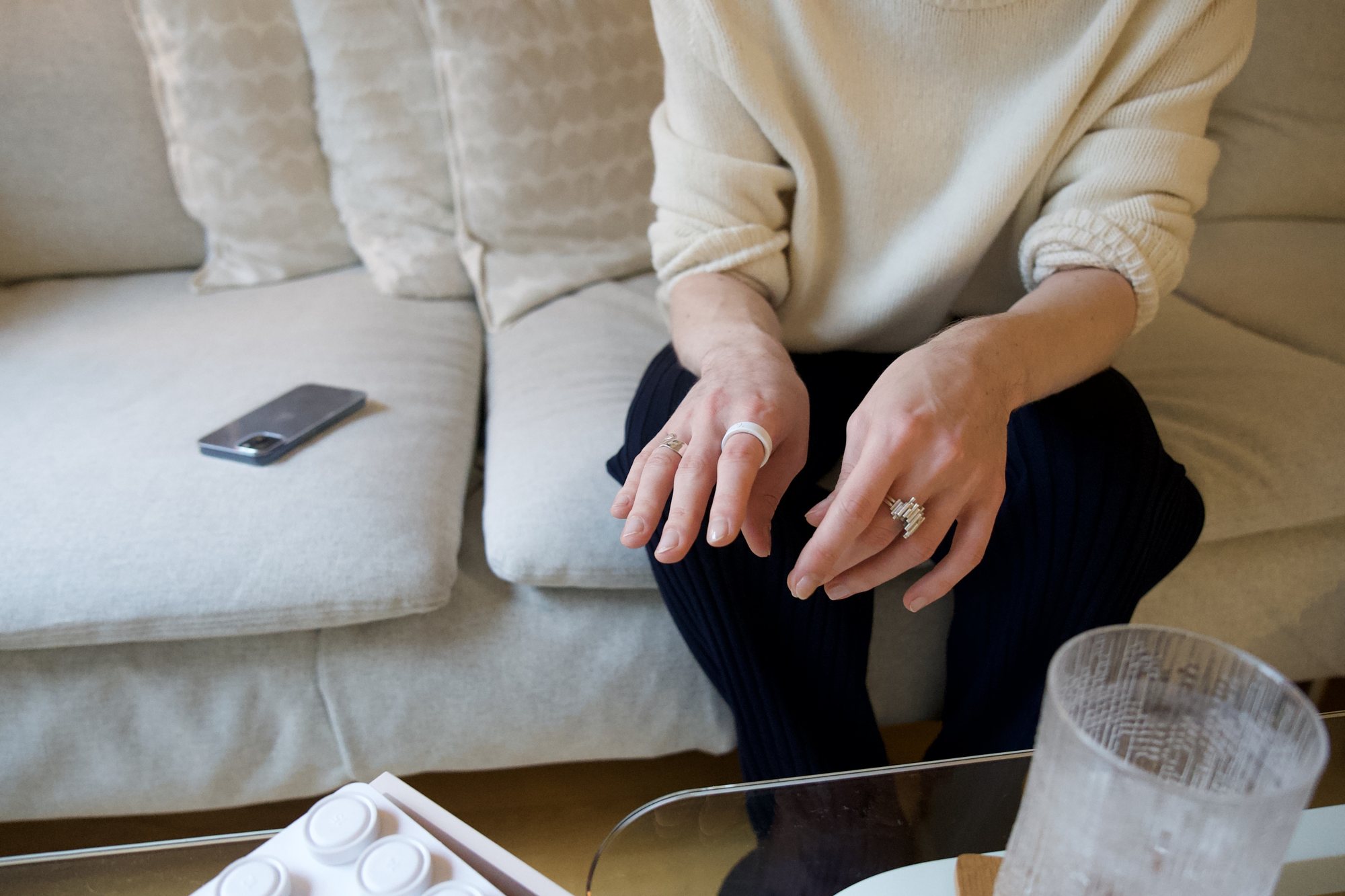
- Learning: We interviewed 23 people aged 30 to 51 in their homes in Finland and Switzerland, with self-reflection exercises, feedback on the provocations, and a remote diary that continued after the visits.
- Developing: We synthesised everything into a framework, design principles and recommended directions — combining the behavioural science with what we saw in people's lives — and shared it with Oura's leadership and design team.
The full project is password-protected
It covers confidential product work. Ask me for the password and I'll gladly share it.

