 Jenni Toriseva

Sustainability mindsets — Electronics and circularity in the Nordics
As concern for the environment reshapes how people buy, Logitech wanted to understand what sustainability will mean to its customers in the near future. We went to Northern Europe to find out.
- Company
- Logitech
- Role
- Design lead
- Duration
- 2 months, Oct–Dec 2019
- Partner
- Circle Economy, Amsterdam
The challenge
To design sustainable hardware, Logitech needed to know what mattered to people about sustainability, how much they knew about what makes electronics sustainable, and where in the journey products most often failed them.
Secondary research pointed to the Nordics, where people placed the most importance on environmental sustainability. We ran our pilot there, believing these attitudes would later spread elsewhere. We also worked with Circle Economy to lay a foundation for more circular design and production.
As design lead I defined the process and activities, led the qualitative research and synthesis, and turned it into actionable insights and design strategy.
How we worked
- A sustainability diary before each visit, where participants collected images and videos of things that meant sustainability to them.
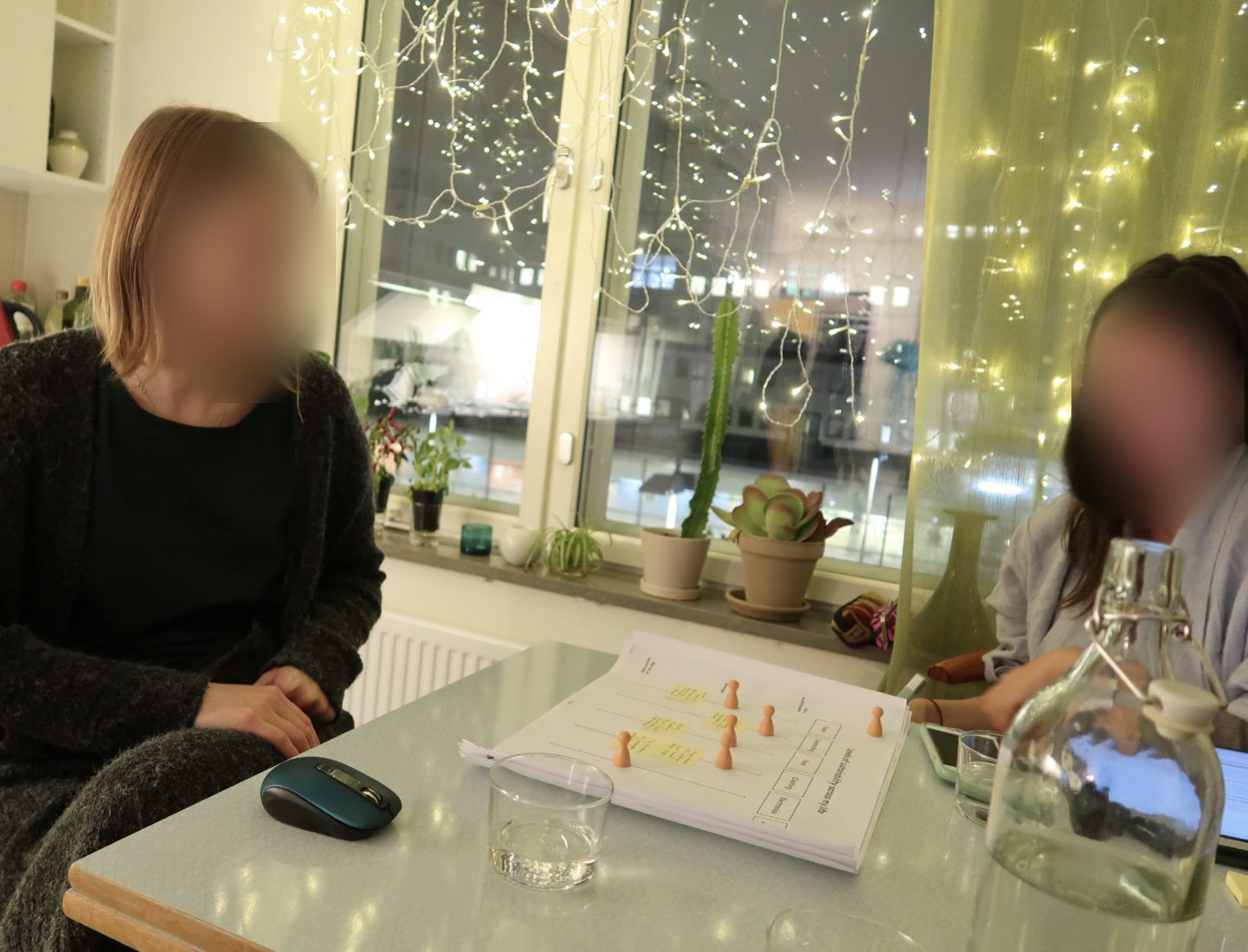
- In-home interviews with 26 people in Denmark, Sweden and Finland: two hours of conversation, a look at their electronics, and interactive mapping activities.
- Concept provocations: physical mockups of products and packaging, concept cards for less tangible ideas, and tokens representing different aspects of sustainability, to see which mattered most.
What we found
We built archetypes around people's core drivers for sustainable consumption and behaviour, and recommended one to focus on in a follow-up pioneering project.
“I wouldn't know where to buy sustainable electronics. I don't know if it's possible to make them more sustainably.”— Research participant, Copenhagen
Outcome
- Opportunity areas driven by user needs and circularity, each with first steps for Logitech.
- Archetypes and a recommended focus for the next project.
- Stories and provocative concepts to show internal teams what circularity could look like for Logitech.
- A Design for Circularity manual: an illustrated guide to circularity across the hardware life cycle, built on the Value Hill, with early actions for each stage of product development.